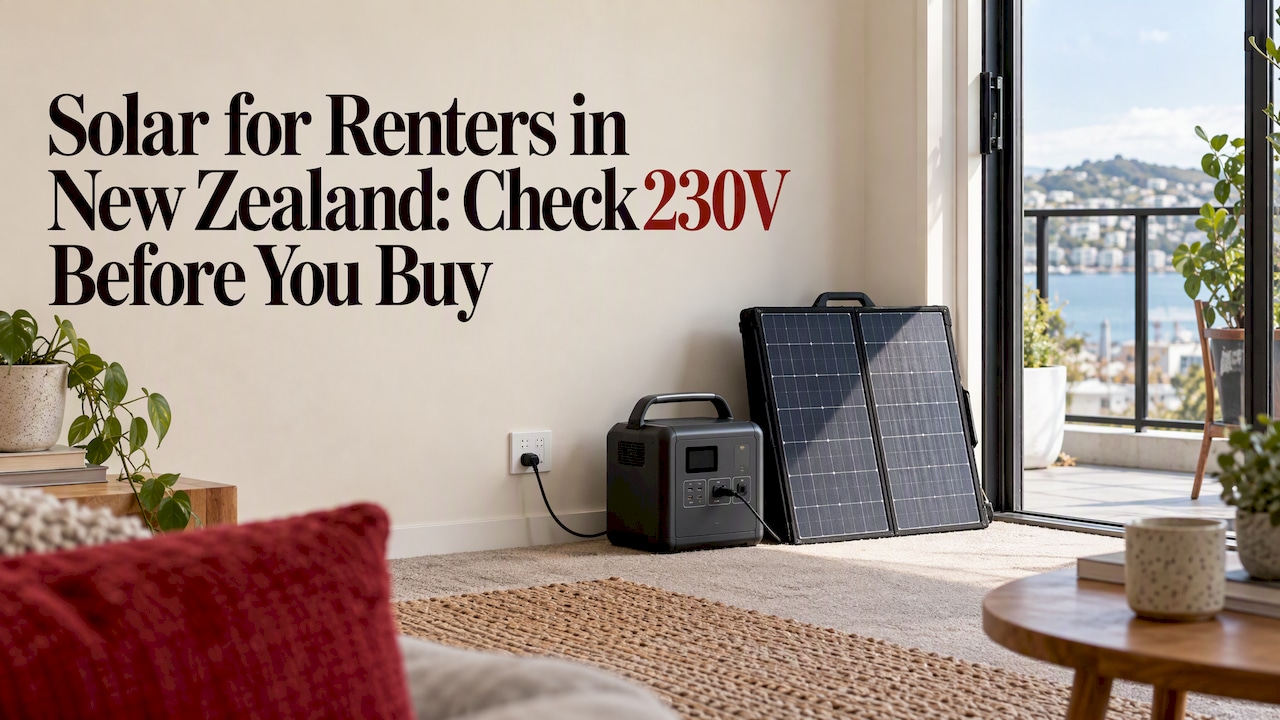
For renters, solar means portable, non-permanent solar-charging storage, not rooftop panels or landlord-installed systems. Our recommendation is a certified portable energy storage system (ESS) that takes solar input and also charges from a standard wall outlet, so you use sunshine when you have it and top up safely when you don’t. Authorities such as the Electricity Authority, WorkSafe and EECA shape how you buy and use one, and we at Kore Grid build for renters.
TL;DR:
- Choose a portable battery that accepts solar and 230V wall charging; socket fed generation is not currently standards compliant or widely available for legal use.
- Match usable capacity to appliance wattage and runtime, rather than the headline figure; small power banks cannot run a fridge, heater, or kettle.
- Before buying, request the Supplier Declaration of Conformity, confirm an NZ plug and 230V rating, and get cycle life and local warranty terms in writing.
- Charge with the supplied charger on a hard, ventilated surface away from bedrooms, bedding, and exits, and keep smoke alarms nearby.
- An overnight top up on a time of use plan can lower charging costs and prepare the battery for morning demand or outages.
Table of Contents
- What portable solar-charging options can renters actually buy?
- How do you choose the right portable system as a renter?
- What safety rules and standards apply to plug-in solar and batteries?
- How do you set up and use a portable ESS safely in a rental?
- Why we back portable storage for renters
- How do our products match what renters need?
- FAQ
- Sources
What portable solar-charging options can renters actually buy?
Think of the market in several product types. Each suits a different job, so matching the type to your needs saves money and frustration.
- Portable all-in-one ESS: a single unit with a battery, inverter and solar input (usually with MPPT, which squeezes more power from panels). It suits renters who want household-level backup without any installation.
- Power banks and small battery packs: handy for phones, laptops and routers. They won’t run a fridge, a heater or a kettle, so treat them as gadget insurance rather than home backup.
- Trolley or wheeled ESS units: higher capacity while still movable. The trade-off is weight and floor space, so they suit a hallway cupboard better than a studio flat.
- Stackable or modular ESS: you add battery capacity over time. This works for renters whose needs may grow, say a move from a smaller unit to a family house.
Whatever the type, we think the most practical units accept both solar input and AC wall charging. Solar alone is intermittent, especially in a shaded unit or through a grey winter week. EECA’s advice is to consider time-of-use plans when charging from the grid, which may help you choose when to top up.
How do you choose the right portable system as a renter?
Start with what you want to run, then work backwards to capacity. A smaller unit may suit phones, laptops, LED lights and a router, depending on their power needs and how long you use them. A mid-sized unit may keep a fridge, lights and devices running, depending on their power needs and the unit’s usable capacity. Larger units extend that runtime or add heavier loads. Check each appliance’s wattage and the unit’s usable capacity, not just the headline number.
Then run through the checks that change a purchase:
- Charging modes: solar input plus 230V AC charging, so you are never stuck waiting on weather.
- Portability: weight, handles or wheels, and whether it fits through your doorways and into a cupboard.
- Safety features: a battery management system (BMS), protections in the charger, and a Supplier Declaration of Conformity (SDoC).
- Local compatibility: an NZ-type plug and a charger rated for 230V.
- Warranty and service: local support matters, because shipping a heavy battery overseas for repairs is a poor deal.
EECA also notes that battery warranties explain degradation and cycle life, and it suggests considering time-of-use plans when charging from the grid. Read the warranty terms before the spec sheet.
Pro Tip: Ask the supplier for the usable capacity in kWh and the warranty’s cycle-life terms in writing before you compare prices.
What safety rules and standards apply to plug-in solar and batteries?
Two things need separating. Portable batteries charged from a wall outlet are a different matter from plug-in generation, where panels feed power back through a standard socket. On the second, the Electricity Authority says plug-in generation is still under investigation, and these grid-interactive systems are not currently standard-compliant or widely available for legal use here. Its overview of plug-in generation says balcony solar could make generation more accessible for renters in future. For now, a self-contained battery you charge from solar panels and a wall outlet keeps you on the right side of that line.
Standards worth asking about include AS/NZS 5139 for battery installations, which the Electrical Workers Registration Board says applies to battery energy storage systems alongside AS/NZS 3000:2018. Standards New Zealand also published SNZ PAS 6014:2025 as practical guidance on residential solar and battery storage, and it warns against unsafe DIY and non-compliant plug-in panels. WorkSafe’s DIY solar guidance adds that some work needs a registered electrician.
Your safety checklist:
- Charge on a hard, non-flammable surface, never on a bed, couch or carpet.
- Use the charger that came with the unit.
- Store and charge in a ventilated, non-habitable space such as a utility area, away from exits and windows, as University of Otago guidelines advise.
- Keep working smoke alarms nearby.
- Ask the supplier for the SDoC before you pay.
Fire and Emergency New Zealand’s lithium-ion battery guidance: misuse is a main driver of battery hazards, so avoid charging in bedrooms or on soft surfaces.
How do you set up and use a portable ESS safely in a rental?
Setup takes preparation, and most of it happens before you use the unit.
- Ask the right questions before buying. Request the SDoC, confirm the charger is rated for 230V with an NZ plug, check the BMS features, and get the warranty and local support terms. WorkSafe’s guidance on lithium-ion batteries recommends buying from reputable suppliers with English instructions.
- Choose a safe spot. Pick a ventilated space with clear space around the unit, away from curtains, bedding and the exit path.
- Charge in two layers. Use solar when the sun is out, and top up from the wall when it isn’t. On a time-of-use plan, charge overnight when power is cheaper so the unit is full before the morning peak or an outage.
- Decide what the unit supports. Plug in essentials such as the fridge, router, lights and phone chargers rather than heavy loads.
- Watch the state of charge. Check it regularly, and don’t leave a unit charging unattended if the manufacturer warns against it.
- Plan your exit. When you move out, power down, let the unit cool, pack it upright in its original packaging if you have it, and carry it rather than dragging it.
Pro Tip: Keep the original box and charger. They protect the unit in transit and keep the safety protections intact.
Why we back portable storage for renters
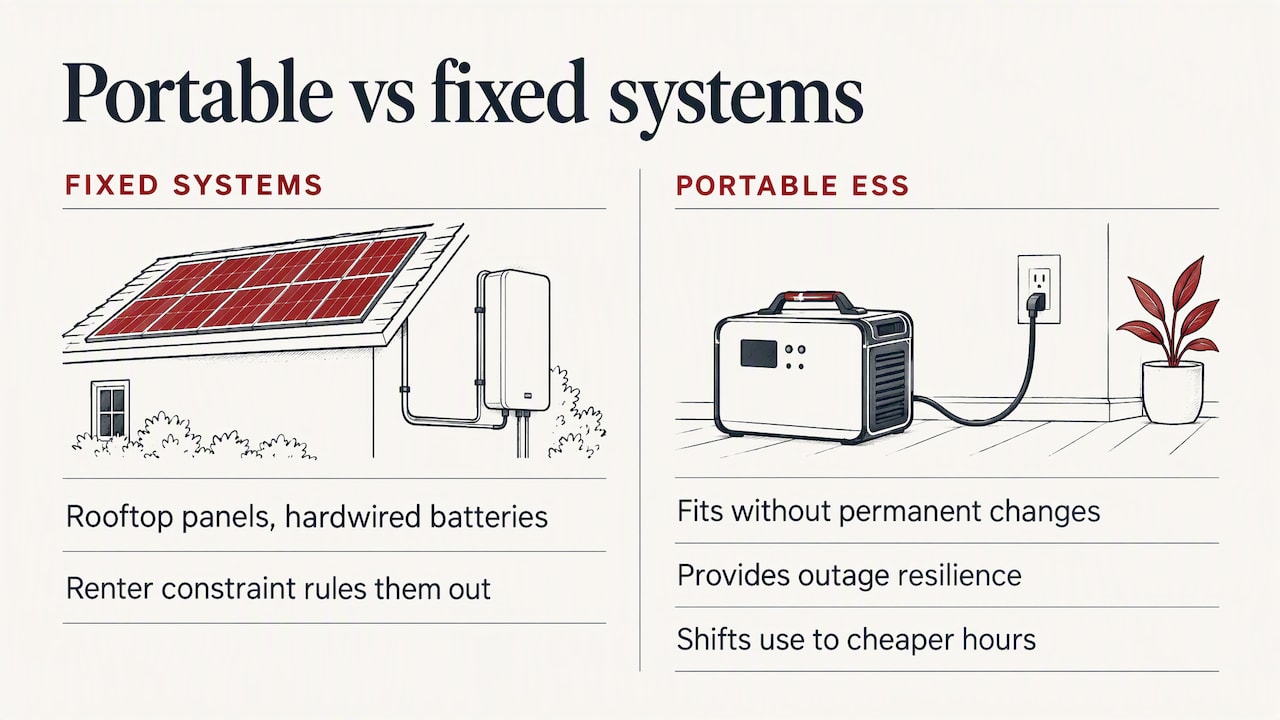
Renters live with a hard constraint: no permanent changes. That rules out most of what energy advice assumes, from rooftop panels to hardwired batteries. A portable ESS fits inside that constraint. It gives you resilience in an outage, and it lets you shift some of your power use to cheaper hours without touching the property.
That is why we at Kore Grid focus on portable, no-install products. The same thinking sits behind our Power-Saving Box, which plugs in rather than being wired in. Whatever you buy, from us or anyone else, prioritise certified products, ask for the SDoC, and choose a supplier with local support. A battery that is cheap but unsupported is rarely a bargain.
— stan
How do our products match what renters need?
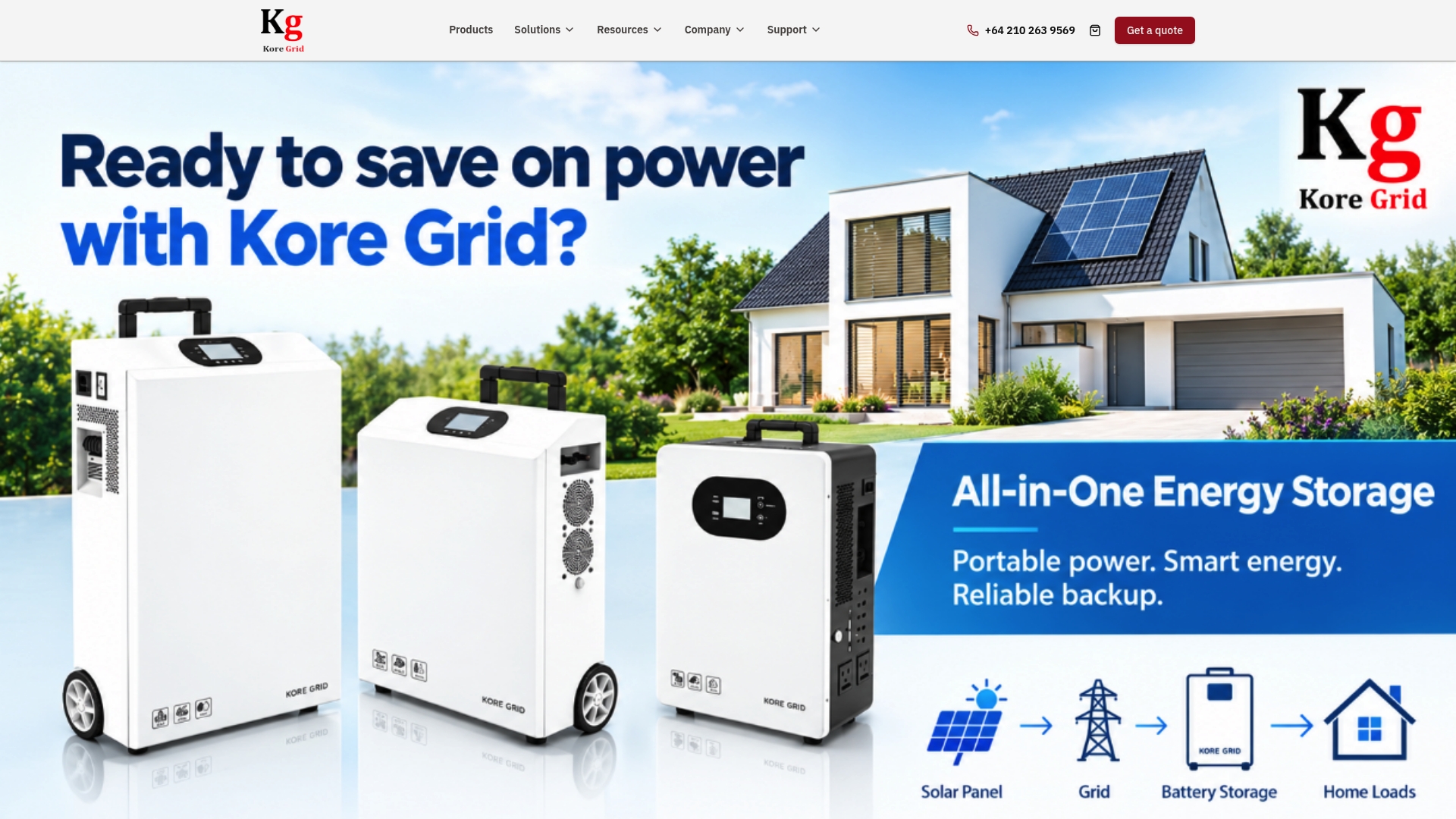
Every product we make works without permanent installation, which is the point for a rental. We back our range with New Zealand support.
- Power-Saving Box: a plug-in unit that targets electrical losses and improves power factor, for renters who want lower bills without any upgrade. Details are on our Power-Saving Box page.
- All-in-One Portable ESS: household-level backup with integrated solar charging.
- All-in-One ESS Trolley: a trolley-mounted energy storage system.
- All-in-One Stackable ESS: modular capacity you can grow into.
Browse the full range on our products page, or request a quote and we’ll help you match a unit to your flat or house.
FAQ
Can renters legally use plug-in solar in New Zealand?
Plug-in generation, where panels feed power through a standard socket, is not currently standard-compliant or widely available for legal use, according to the Electricity Authority. A portable battery charged from panels and a wall outlet is a different product type.
Do I need an electrician to use a portable solar battery?
A self-contained portable unit that plugs into a wall outlet generally doesn’t involve installation work. WorkSafe notes that PV and battery installations can require a registered electrician, so check before wiring anything in.
Where is it safe to charge a portable battery in a rental?
Choose a hard, ventilated surface away from bedding and exits. Fire and Emergency New Zealand advises against charging in bedrooms or on soft surfaces and recommends using the original charger.
Should my portable battery charge from the wall as well as solar?
Yes, a unit with both inputs is the most practical choice. Solar is intermittent, and wall charging lets you top up cheaply overnight, which suits time-of-use plans.
Leave a Reply